

Fully Automatic Hematology Analyzers have revolutionized the field of medical diagnostics by providing fast, accurate, and reliable blood analysis. These advanced instruments offer numerous benefits that streamline laboratory operations and improve patient care. This article explores the key advantages of Fully Automatic Hematology Analyzers.
Optimized Liquid Path: Low Failure Probability & Excellent Maintainability
One of the most significant advantages of Fully Automatic Hematology Analyzers is their optimized liquid path. This feature ensures that the analyzers have a low failure probability, making them highly reliable for routine and critical testing. The optimized liquid path reduces the chances of blockages and other issues that can lead to instrument downtime. Moreover, these analyzers are designed with excellent maintainability in mind, allowing for easy cleaning and maintenance, which further minimizes operational disruptions.
Floating Boundary Mark: Accurate Classification & Reliable Results
Another critical feature of Fully Automatic Hematology Analyzers is the floating boundary mark technology. This innovation allows for the accurate classification of different blood cell types, ensuring reliable results. Accurate classification is crucial in diagnosing various hematological conditions, and the floating boundary mark technology enhances the precision of these classifications. This results in improved diagnostic accuracy, leading to better patient outcomes.
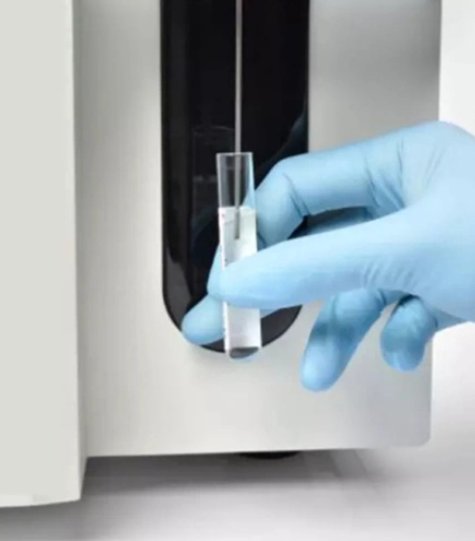
The floating boundary mark technology works by dynamically adjusting the classification boundaries based on the characteristics of the blood sample being analyzed. This adaptability ensures that even slight variations in cell size and morphology are accurately detected and classified. As a result, laboratories can provide more precise and detailed diagnostic information to clinicians, aiding in the early detection and management of diseases such as anemia, leukemia, and other blood disorders. The improved accuracy of these analyzers translates directly into better patient care and more effective treatment plans.
Linear Fitting: Breakthrough of Test Threshold of Platelet Volume of 2 fL
Fully Automatic Hematology Analyzers have made significant advancements in platelet volume measurement. The linear fitting technology used in these analyzers allows for a breakthrough in the test threshold of platelet volume, going as low as 2 femtoliters (fL). This capability is particularly important for accurately diagnosing and monitoring conditions related to platelet size and count. The ability to measure such small volumes with high accuracy is a testament to the technological advancements in these analyzers.
Platelets play a critical role in blood clotting and wound healing, and abnormalities in platelet size and count can indicate various medical conditions, including thrombocytopenia and thrombocytosis. By providing accurate measurements of platelet volume, Fully Automatic Hematology Analyzers help clinicians assess the patient's hemostatic function more precisely. This level of detail is essential for guiding treatment decisions, monitoring therapeutic responses, and predicting potential complications. The linear fitting technology thus represents a significant advancement in hematological diagnostics, offering unparalleled precision and reliability.
No Residue of Reagent: The Best Choice of Cost Performance with No Residue of Diluent/Hemolytic Agent
Cost performance is a crucial consideration in laboratory operations, and Fully Automatic Hematology Analyzers excel in this area by leaving no residue of reagent, diluent, or hemolytic agent. This feature not only reduces waste and operational costs but also ensures that the analyzers operate efficiently without the risk of contamination from residual chemicals. The absence of reagent residue makes these analyzers a cost-effective choice for laboratories, enhancing their overall value and performance.
The elimination of reagent residue also contributes to the environmental sustainability of laboratory practices. By reducing chemical waste, laboratories can minimize their ecological footprint and adhere to stricter environmental regulations. Furthermore, the clean operation of these analyzers ensures that subsequent tests are not compromised by residual chemicals, maintaining the integrity of results and reducing the likelihood of false positives or negatives. This aspect of cost performance underscores the practical and ethical advantages of Fully Automatic Hematology Analyzers, making them an ideal choice for modern laboratories.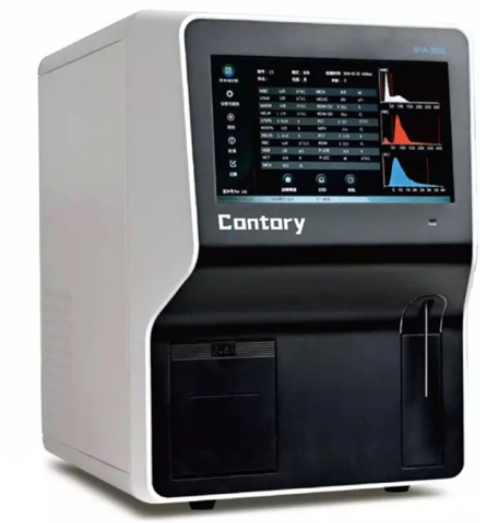
6 μL Micro Blood Sample: Satisfaction of Requirements of Various Scenes with Venous Blood/Capillary Blood/Pre-diluted Samples
The ability to analyze micro blood samples is another significant advantage of Fully Automatic Hematology Analyzers. These instruments require only 6 microliters (μL) of blood, making them suitable for various testing scenarios, including venous blood, capillary blood, and pre-diluted samples. This versatility is particularly beneficial in pediatric and geriatric care, where obtaining larger blood samples can be challenging. The minimal sample requirement also reduces patient discomfort and allows for more frequent testing when necessary.
Small sample volumes are especially important in settings where blood conservation is critical, such as in neonatal intensive care units (NICUs) and oncology clinics. For infants and patients with compromised health, the ability to conduct comprehensive blood tests with minimal blood loss is a significant advantage. Additionally, the versatility in sample types ensures that Fully Automatic Hematology Analyzers can be used in a wide range of clinical settings, from routine check-ups to specialized diagnostic procedures. This flexibility enhances their utility and makes them indispensable tools in modern healthcare.
Enhancing Laboratory Efficiency and Patient Care
Fully Automatic Hematology Analyzers play a crucial role in enhancing laboratory efficiency and patient care. Their advanced features, such as optimized liquid paths, floating boundary marks, linear fitting technology, and minimal reagent residue, contribute to more streamlined operations and improved diagnostic accuracy. By requiring only small blood samples, these analyzers also enhance patient comfort and enable more flexible testing options.
The integration of advanced automation technologies in these analyzers reduces the workload of laboratory staff, allowing them to focus on more complex tasks and improving overall productivity. Automated processes minimize the risk of human error, ensuring consistent and reliable results. This level of efficiency is vital in high-volume laboratories where quick turnaround times are essential. Additionally, the improved diagnostic accuracy provided by these analyzers leads to more timely and appropriate clinical interventions, ultimately enhancing patient outcomes and satisfaction.
The benefits of Fully Automatic Hematology Analyzers are clear: they offer optimized liquid paths for reliability, floating boundary marks for accuracy, linear fitting for advanced platelet measurement, no reagent residue for cost efficiency, and minimal blood sample requirements for versatility. These features collectively improve laboratory efficiency, diagnostic accuracy, and patient care. As technology continues to advance, Fully Automatic Hematology Analyzers will remain indispensable tools in the field of medical diagnostics, providing critical support for the detection and management of hematological conditions.