

What is Fully Automated ELISA Laboratory Equipment
Fully Automated ELISA Laboratory Equipment represents a significant advancement in biomedical technology. These devices streamline the Enzyme-Linked Immunosorbent Assay (ELISA) process, which is a fundamental technique used in laboratories for detecting and quantifying substances such as proteins, antibodies, and hormones. Automation enhances the precision, efficiency, and throughput of ELISA, making it indispensable in clinical diagnostics, research, and pharmaceutical industries.
Introduction to Fully Automated ELISA Equipment
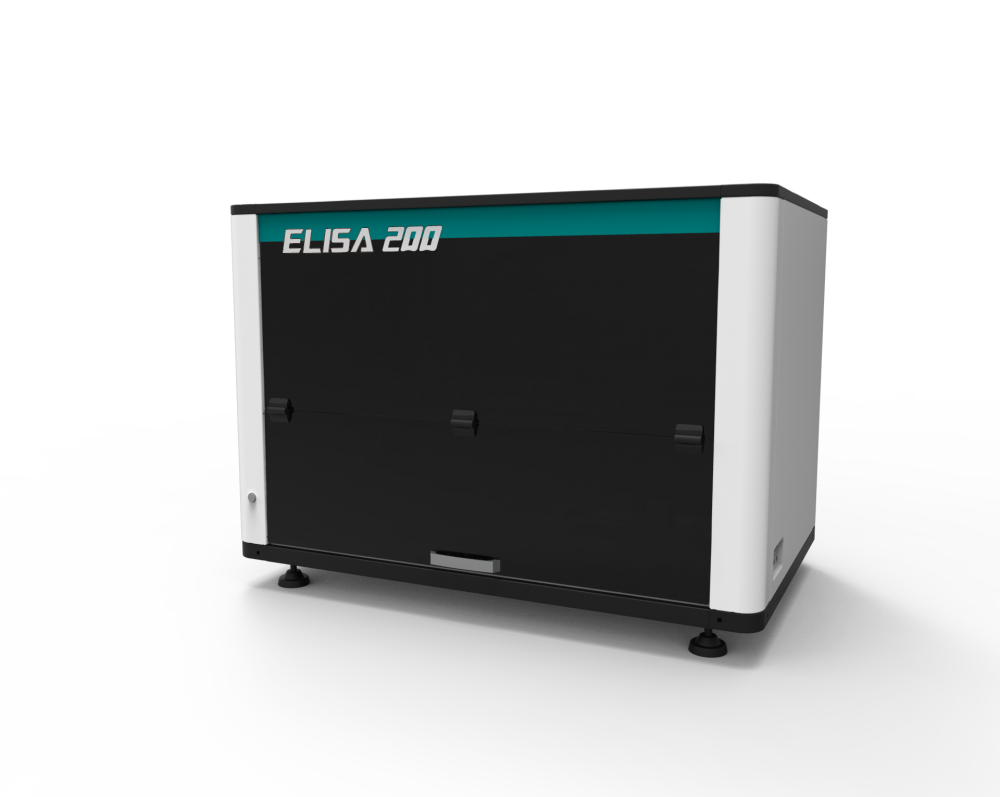
Fully Automated ELISA Equipment is designed to handle high-throughput samples efficiently, catering to the needs of large-scale laboratories. The equipment typically features a work surface measuring around 200cm, equipped with multiple sample injection needles, temperature-controlled incubation positions, and extensive plate storage capacities. For instance, some models come with 8 sample injection needles, 12 temperature-controlled incubation positions, 12 room temperature incubation positions, and 32 plate storage positions. Additionally, they are often integrated with sophisticated components like the Sunrise microplate reader and the HydroFlex plate washer, capable of processing up to 512 specimens and allowing parallel loading of up to 6 plates for rapid dispensing.
The Evolution of ELISA Technology
ELISA technology has undergone remarkable evolution since its inception. Initially, ELISA was a manual and labor-intensive process requiring meticulous handling and time-consuming steps. With advancements in automation, modern ELISA systems have drastically reduced the manual effort involved. Early automation systems could handle basic functions like plate washing and reading. However, contemporary Fully Automated ELISA Equipment integrates advanced robotics, intelligent software, and high-precision components, significantly enhancing the speed, accuracy, and reproducibility of the assays.
Key Features of Fully Automated ELISA Systems
Fully Automated ELISA Systems boast several key features that set them apart:
- High-Throughput Capability: These systems can process a large number of samples simultaneously, with some models accommodating up to 512 specimens.
- Intelligent Reuse and Capacity: Designed for large-capacity publishing, these systems can intelligently manage the reuse of reagents and samples, optimizing efficiency.
- Advanced Incubation Controls: They offer multiple incubation positions with precise temperature control, ensuring optimal conditions for reactions.
- Robust Plate Storage and Handling: With extensive plate storage options and efficient handling mechanisms, these systems can sequentially and parallelly load samples, reagents, and microplates for fast dispensing.
- Integrated Readers and Washers: Incorporating devices like the Sunrise microplate reader and the HydroFlex plate washer, they provide comprehensive assay processing capabilities.
High-Throughput Sample Processing Capabilities
High-throughput sample processing is a hallmark of Fully Automated ELISA Laboratory Equipment. These systems are engineered to manage large volumes of samples efficiently, significantly reducing the time required for processing. For example, the ability to sequentially load samples, reagents, and microplates, combined with parallel loading capabilities for up to 6 plates, ensures that laboratories can handle extensive sample volumes without compromising on accuracy or speed. This is particularly crucial in clinical settings where timely results are essential for patient care.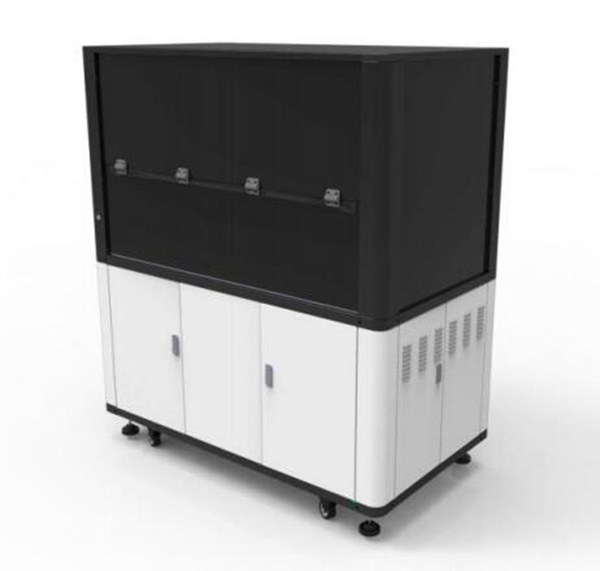
Principles of Enzyme Immunoassay Analysis
The operation of Fully Automated ELISA Equipment is based on the principles of enzyme immunoassay analysis. The fundamental mechanism involves the interaction between an enzyme and a substrate to produce a color reaction. Different substances absorb light at specific wavelengths, and this property is leveraged for quantitative and qualitative analysis, adhering strictly to the Lambert-Beer law.
The process begins with the sample being added to microwells on a pre-coated antigen or antibody microtiter plate. After a series of incubation and washing steps to remove unbound ligands, an enzyme-labeled isolate is added. Following further incubation and washing, an enzyme substrate is introduced, leading to a colorimetric reaction. The absorbance of each microwell is measured using a spectrophotometer, and the concentration of the analyte is calculated based on a standard curve or compared against a standard product for qualitative results.
The automation of this intricate process ensures high precision and reproducibility, with the microprocessor controlling the mechanical movements and data processing. This results in accurate and reliable assay outcomes, essential for diagnostic and research applications.
Fully Automated ELISA Laboratory Equipment represents a leap forward in laboratory technology, combining high-throughput capabilities with precision and efficiency. These systems are instrumental in enhancing the accuracy and speed of ELISA assays, making them invaluable tools in various scientific and clinical fields.