

Introduction to Urine Analyzers
Urine analyzers are essential automated instruments designed to measure various chemical components in urine. These devices play a critical role in medical laboratories by providing rapid and accurate urine analysis, which is indispensable for diagnosing and monitoring a wide range of diseases. The primary advantage of urine analyzers lies in their ability to deliver precise results quickly, thus facilitating timely medical interventions. Despite their benefits, improper use and various influencing factors can significantly impact the accuracy of the analysis, leading to erroneous results and potential delays in diagnosis. Therefore, it is crucial for operators to thoroughly understand the principles, performance, and operational precautions of these automated instruments to ensure reliable and accurate outcomes.Urine Analysts are commonly used medical instruments and equipment.
History and Development of Urine Analysis
The history of urine analysis dates back to ancient times when physicians would observe the color, smell, and taste of urine to diagnose illnesses. However, it was not until the 1950s that urine analysis began to take a more scientific and automated approach. During this period, the single dry chemical test strip method was introduced, allowing for the measurement of protein and glucose in urine by observing color changes on the test strip. This method, though innovative for its time, relied heavily on the subjective judgment of the observer.
The 1980s marked a significant milestone in the evolution of urine analysis with the advent of computer technology. The introduction of microcomputers enabled the development of automated urine analyzers, transforming the process from semi-automated to fully automated. This technological advancement greatly enhanced the accuracy and efficiency of urine analysis, reducing the reliance on human interpretation and minimizing errors.
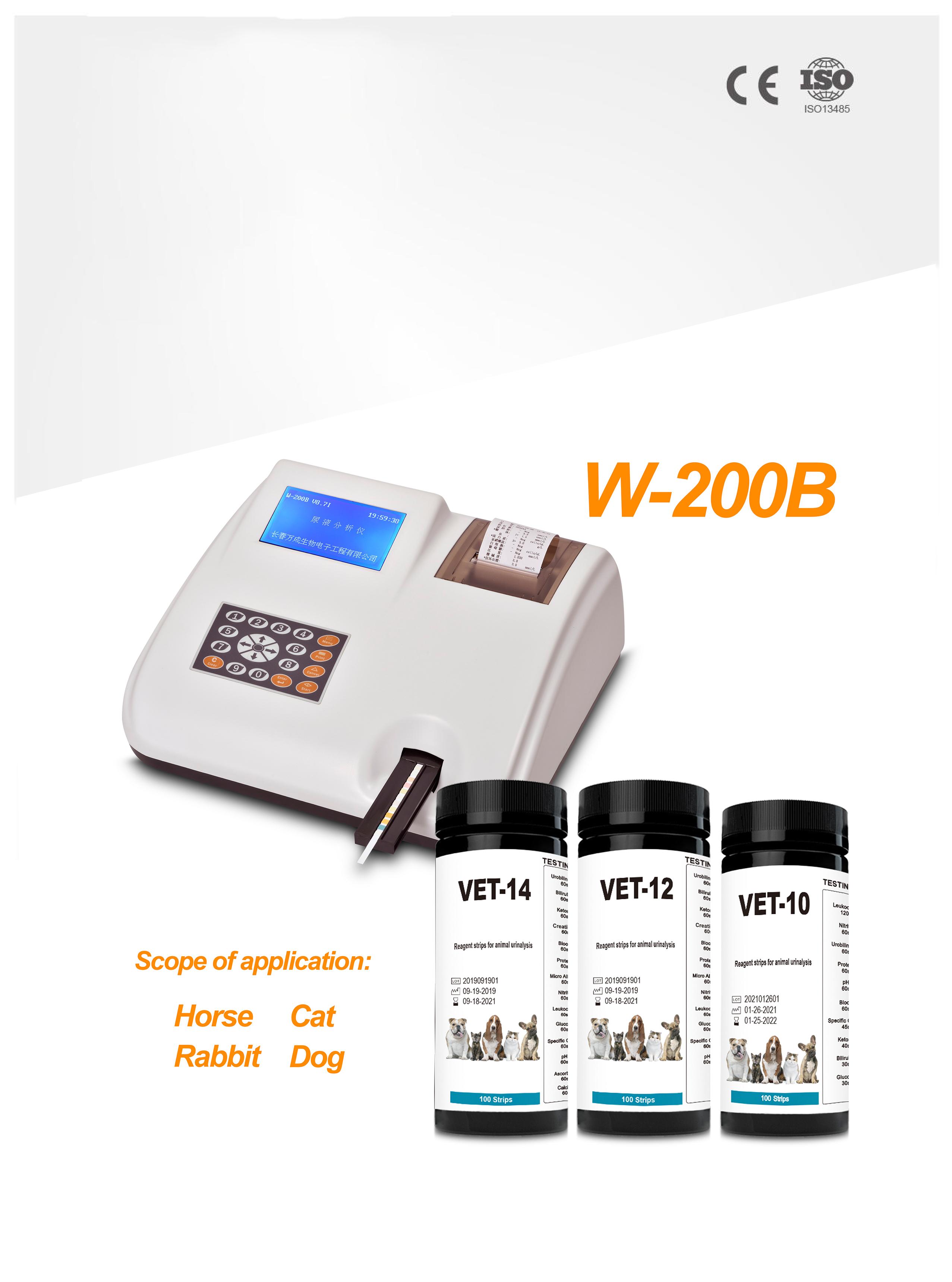
Modern Classifications of Urine Analyzers
Modern urine analyzers can be broadly classified into two categories based on their test items. The first category includes analyzers that use 8-11 parameter urine test strips, primarily employed for initial diagnosis and health examinations. These test strips typically measure protein, glucose, pH, ketone bodies, bilirubin, urobilinogen, red blood cells (occult blood), nitrite, and in some cases, leukocytes and vitamin C.
The second category comprises analyzers used for monitoring the efficacy of treatments for diagnosed diseases. These devices often use combination test strips tailored to specific conditions, such as pH, protein, and occult blood for kidney disease; pH, glucose, and ketone bodies for diabetes; and bilirubin and urobilinogen for liver disease.

Working Principle of Urine Analyzers
Urine analyzers generally operate based on the principle of reflectance photometry. Controlled by a microcomputer, these instruments measure the color change on the test strip semi-quantitatively using a spherical integrator that receives dual-wavelength reflected light. The reagent strip contains several pads with various reagents that react independently with corresponding components in the urine, displaying different colors. The depth of the color is proportional to the concentration of the specific component in the urine.
The reagent strip, after absorbing urine, is placed in the colorimetric tank of the analyzer. The light source illuminates the reagent pads, and the spherical analyzer receives the reflected light. The photocell of the spherical analyzer irradiates the pads with dual-wavelength light (measurement light passing through a filter and a reference light). The instrument then automatically calculates the reflectance using a specific formula and compares it with a standard curve to determine the concentration of each component. High concentrations of a component result in darker reflected light from the reagent pad, whereas lower concentrations produce stronger reflected light.
Factors Affecting the Accuracy of Urine Analysis
Several factors can influence the accuracy of urine analysis results. These include the quality and condition of the reagent strips, the calibration of the analyzer, the cleanliness of the instrument, and the operator's proficiency. For instance, expired or improperly stored reagent strips can yield inaccurate results. Similarly, an analyzer that is not regularly calibrated may produce erroneous readings. Contamination of the instrument with residues from previous tests can also affect the results, highlighting the importance of meticulous cleaning and maintenance.
Operator error is another critical factor. Inadequate training or lack of familiarity with the instrument can lead to incorrect usage, further compromising the accuracy of the analysis. Therefore, it is imperative for laboratory personnel to receive thorough training and to adhere strictly to the operational guidelines provided by the manufacturer.
Maintenance and Care of Urine Analyzers
Proper maintenance and care of urine analyzers are essential to ensure their optimal performance and longevity. Regular calibration, as per the manufacturer's recommendations, is crucial to maintain the accuracy of the instrument. Additionally, routine cleaning of the instrument, particularly the colorimetric tank and reagent strip holder, helps prevent contamination and ensures reliable results.
It is also important to store reagent strips correctly, in a dry and cool environment, to preserve their efficacy. Operators should routinely check the expiration dates of reagent strips and discard any that are expired. Regularly updating the software of the analyzer, if applicable, can also enhance its performance and incorporate the latest advancements in urine analysis technology.
Ensuring the Reliability of Urine Analysis Results
To ensure the reliability of urine analysis results, a combination of factors must be addressed. Firstly, the proper selection and maintenance of the urine analyzer are critical. Laboratories should invest in high-quality analyzers from reputable manufacturers and follow stringent maintenance protocols. Secondly, the training and proficiency of the operators play a significant role. Continuous education and hands-on training sessions can help operators stay updated with the latest techniques and best practices.
Furthermore, adhering to standardized procedures for sample collection, handling, and analysis is essential. Ensuring that urine samples are collected in clean containers and analyzed promptly can minimize the risk of contamination and degradation. Finally, implementing quality control measures, such as running control samples and participating in proficiency testing programs, can help identify and rectify any discrepancies in the analysis process, thereby enhancing the overall accuracy and reliability of urine analysis results. Auto Chemistry Analyzer is the trend of medical testing development